Fine Art Photography • Education
Fine Art Nude Photography
What It Is, and What It Isn’t
The first thing most people do when they hear “fine art nude photography” is flinch. There’s a reflex built from years of the internet being the internet that files anything involving a nude subject into a category it has absolutely no business being in.
I’m going to be direct: fine art nude photography and explicit content are not the same thing. They don’t live in the same genre, serve the same purpose, or produce the same kind of image. The only thing they share is that the subject isn’t wearing clothes. Everything else — the intention, the process, the result, and what the images actually do to the person looking at them — is different.
This article exists because the women who reach out to me about this service deserve an honest explanation of what they’re actually walking into. And because the confusion around it keeps too many people from an experience that they would find genuinely meaningful.
What It Actually Is
Fine art nude photography is portraiture. The subject happens to not be wearing clothing. That’s where the similarity to anything else ends.
The tradition goes back centuries before photography existed. Painters, sculptors, draughtsmen. The human form as subject matter runs through every serious art movement in recorded history because the body is one of the most complex and interesting things a camera or a brush can point at. Form, light, shadow, proportion, the specific weight a body carries when it stops performing and just exists.
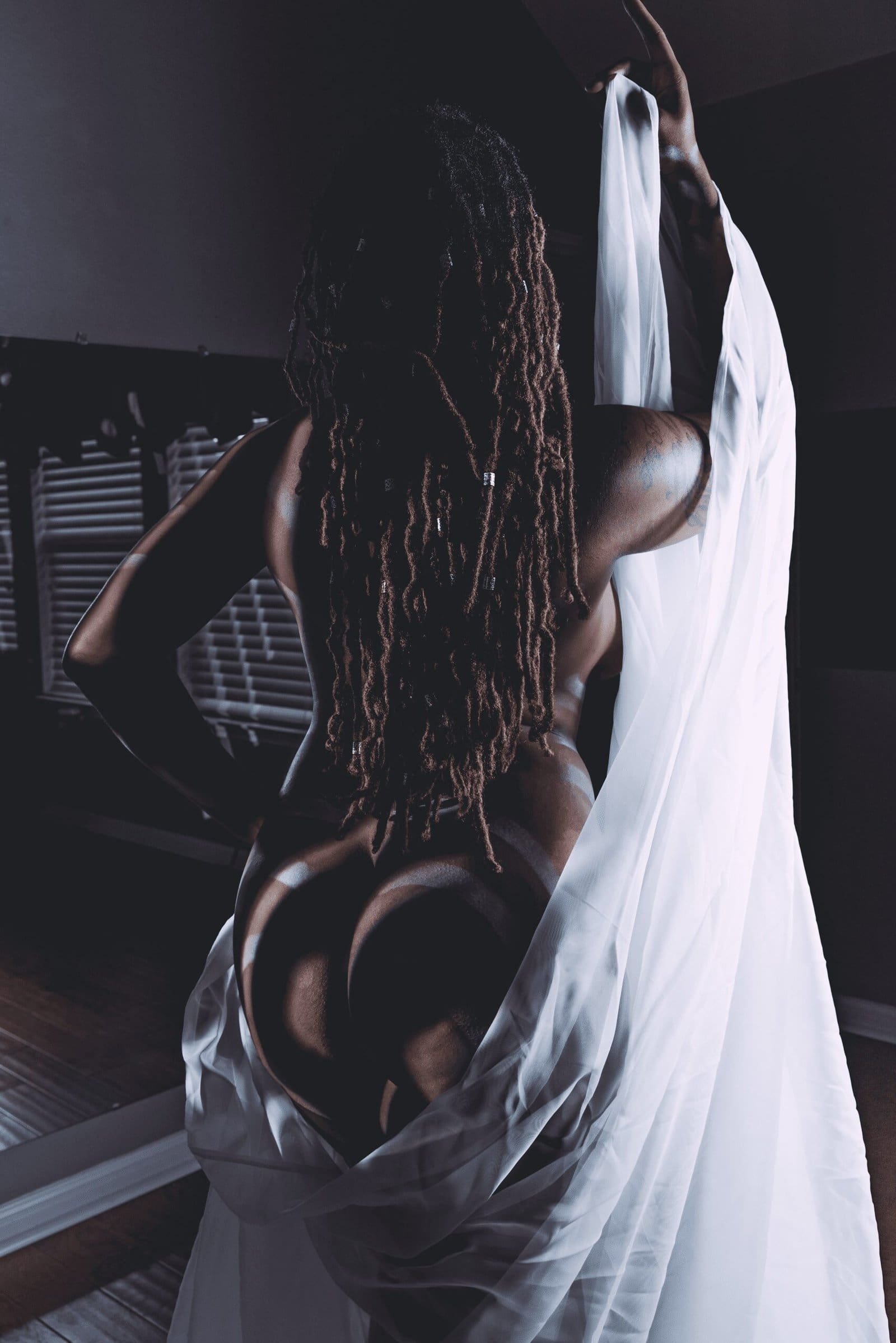
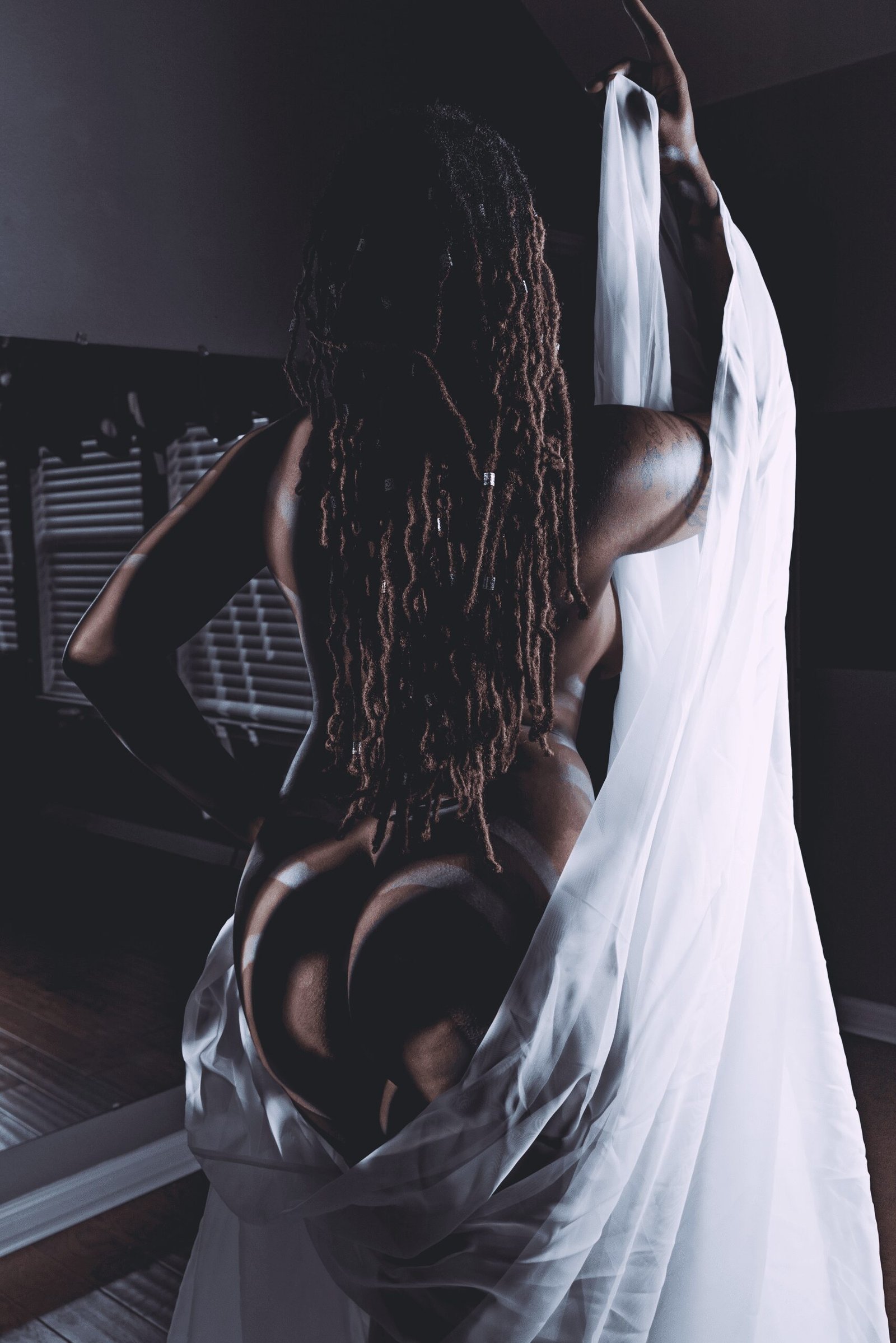
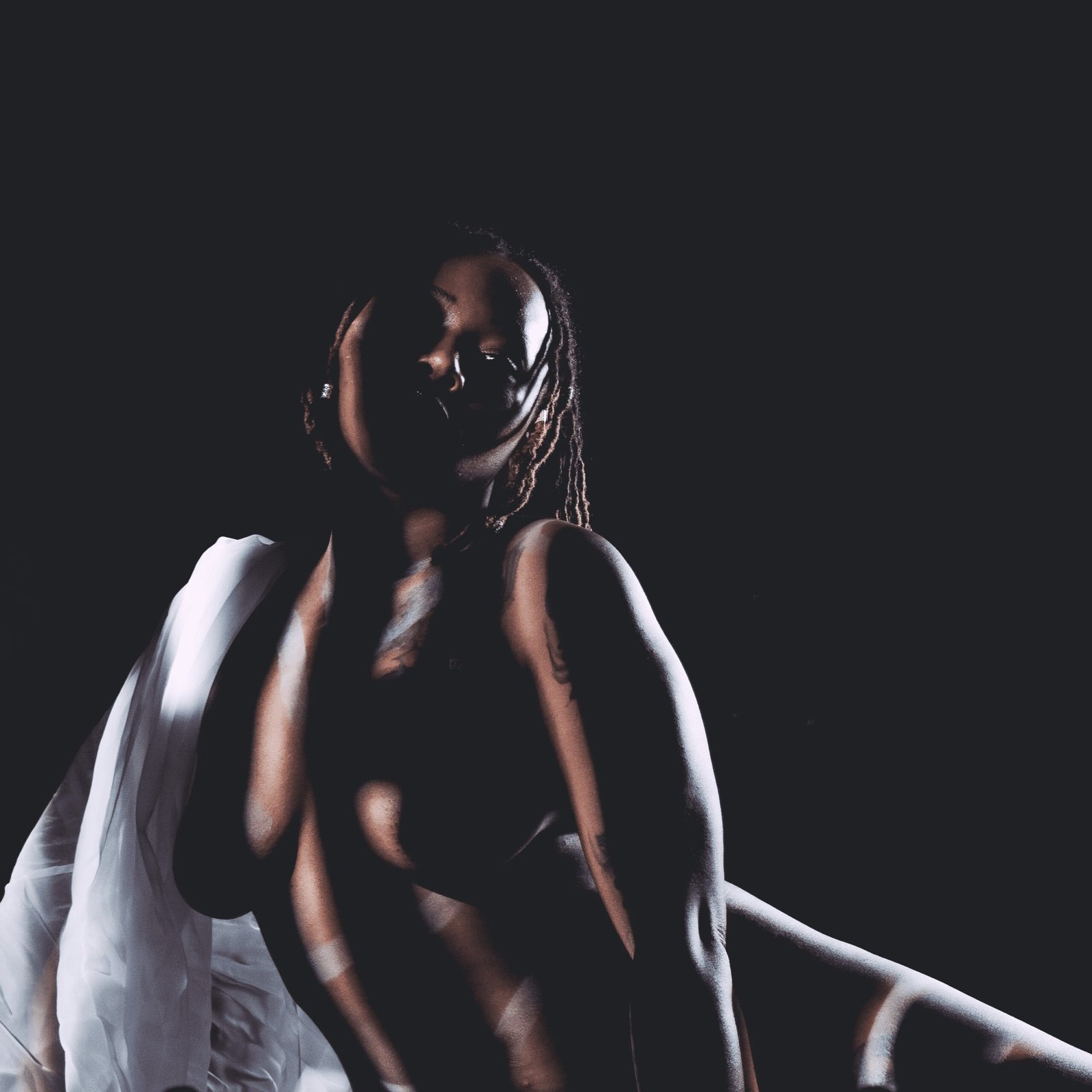
What makes it fine art specifically is not just the absence of clothing. It’s the deliberate use of light, shadow, composition, and framing to treat the human form as a subject worth examining honestly. Every decision in the frame is intentional. The light tells you where to look. The shadow tells you what to feel.
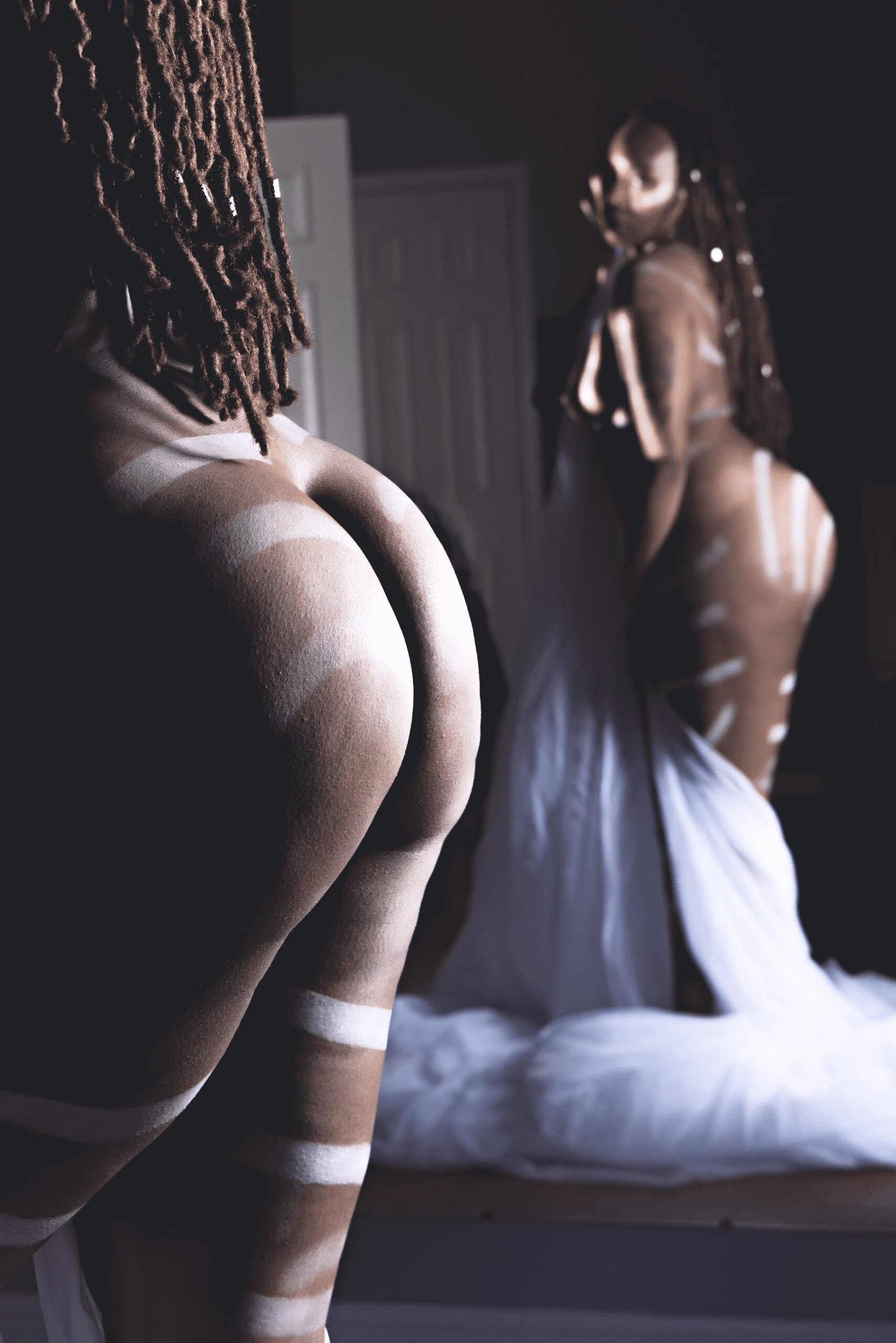
Form, light, shadow — the entire composition in three elements
What It Is Not
Intentional portraiture using the body as the canvas
Controlled use of shadow to protect and conceal
Light that celebrates form — figure, line, curve
A centuries-old artistic tradition applied to photography
An empowering experience for the subject
Images that belong on a wall
Pornography or explicit content of any kind
Boudoir photography — that is a different conversation
Glamour, fashion, or commercial editorial
An excuse to expose — the work is built on concealment
Shared without explicit written consent — ever
A performance of nudity — it is a study of form
It’s not porn. Full stop. Explicit content is produced to expose. Fine art nude photography is designed to do the opposite — to conceal strategically, to use shadow as a compositional tool, to draw the eye to what matters and let everything else fall into darkness. The intent is entirely different. The images look nothing alike.
The Role of Light and Shadow
In standard portrait work, the goal is usually to flatter — minimize shadows, soften edges, present the subject in the best possible light. You light to reduce the things that might read as flaws.
Fine art nude photography inverts that logic entirely. Shadow is not the enemy. Shadow is the medium.
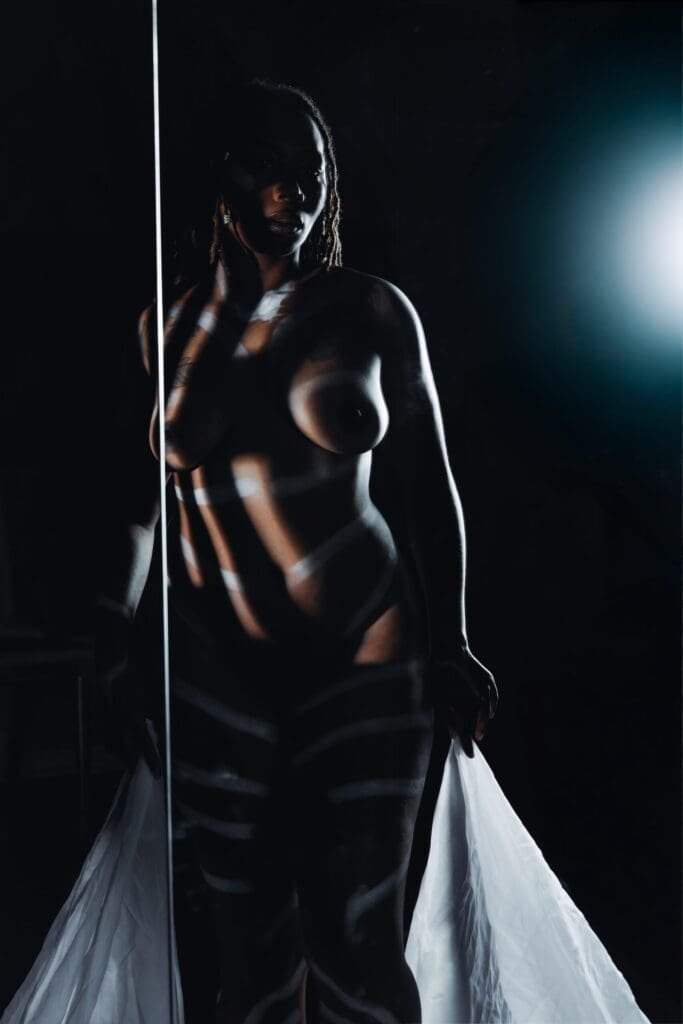
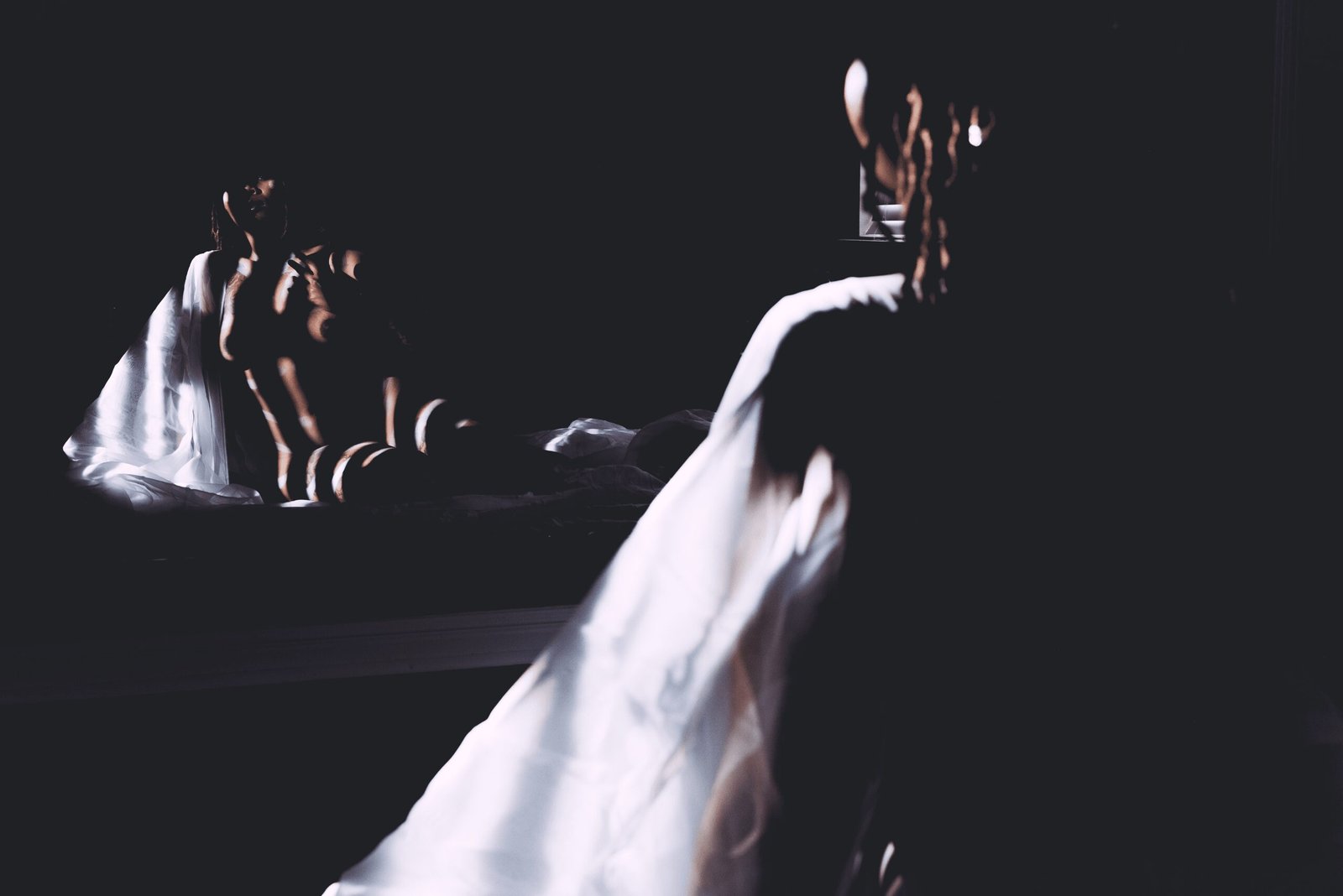
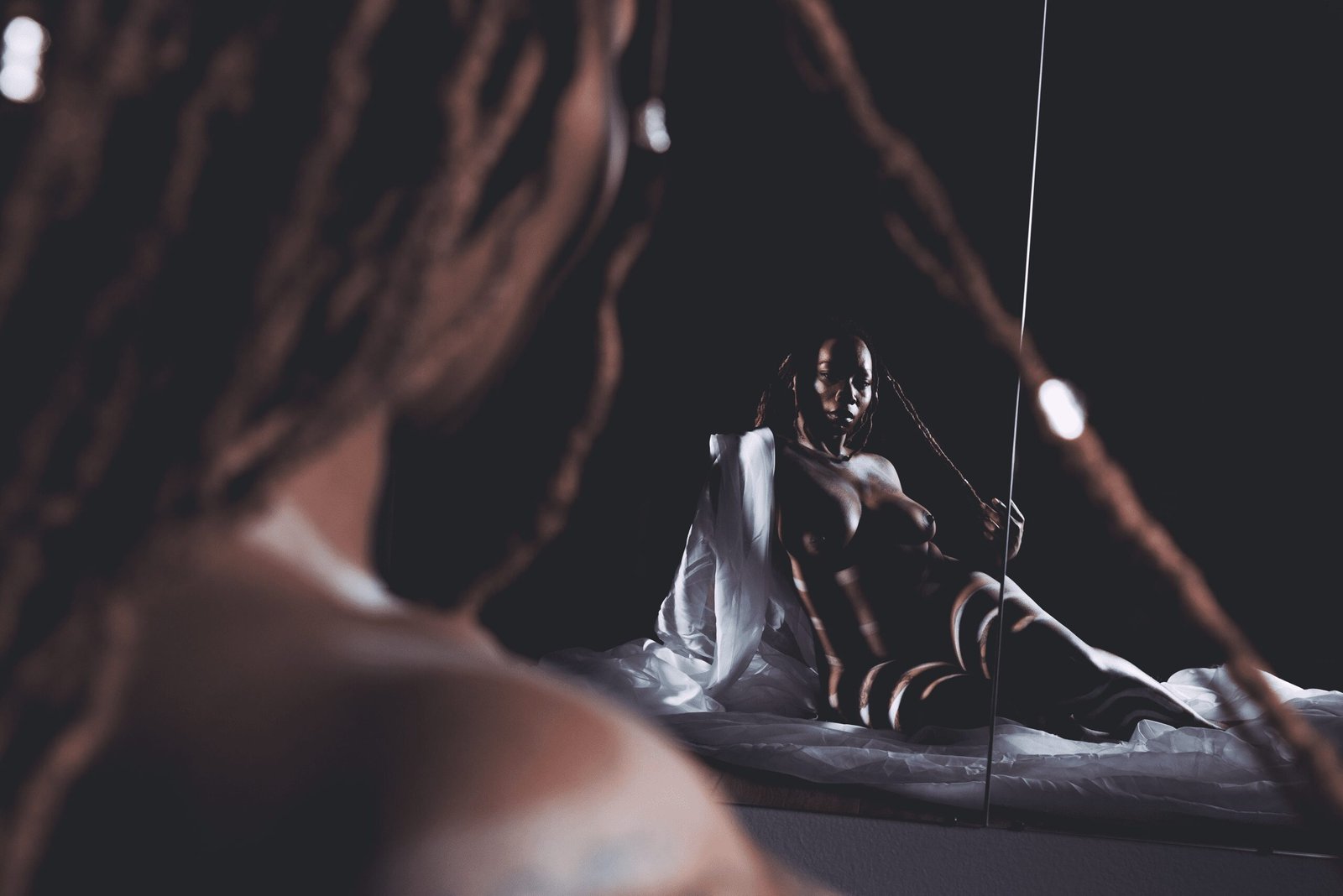
The shadows in a fine art nude image are doing structural work. They define the form. They create depth where a flat light source would flatten everything into a surface. They give the image weight. And they handle the question of exposure — what to show and what to withhold — better than any amount of posing or styling ever could.
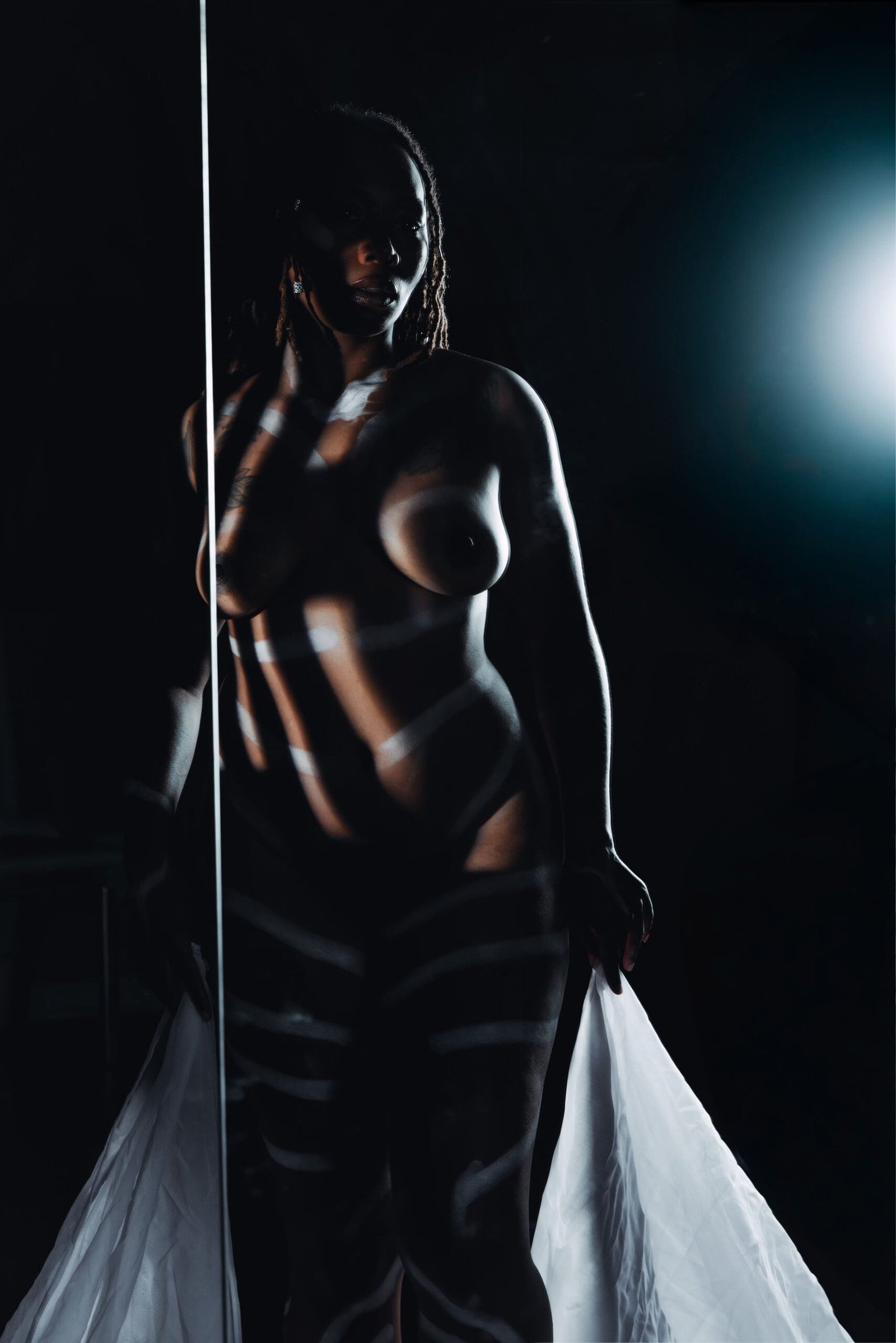
The highlight celebrates the form. The shadow protects what it needs to protect. Used together with intention, they make images that are genuinely empowering — because the subject sees themselves at their most elemental, framed with care.
On the fine art nude shoot I did with Nyeusi Almasi at KTS, I used a gobo and optical snoot setup specifically to manage what the light revealed. Shadow bars fell across the areas of her body that needed to stay private, while the light traced the curve of her figure and pulled the eye toward her face, her posture, the specific quality of presence she brought to the frame. You look at those images and you see a person. You see form and light and intention. Nothing exposed that wasn’t meant to be seen.
Why Women Book These Sessions
It’s different for everyone. But a few things come up consistently.
Some women book because they want to see themselves without apology. Years of being told what their body should look like, what it should cover — and then one session where the only question is what that body actually looks like when someone points a lens at it with real intention. The images that come out of it are often described as the first time they have genuinely liked a photograph of themselves.
Some book because they’re at a specific moment in life — a milestone age, a body that has changed, a chapter that is closing or opening — and they want a record of it that’s honest rather than flattering. Not filtered. Real.
Some book because they’ve seen the work and want to know what it feels like to be on the other side of that kind of attention. To be seen specifically. To have someone look through a lens at them and be entirely focused on what makes them interesting rather than what makes them conventionally appealing.
All of those reasons are legitimate. All of them result in images worth having.
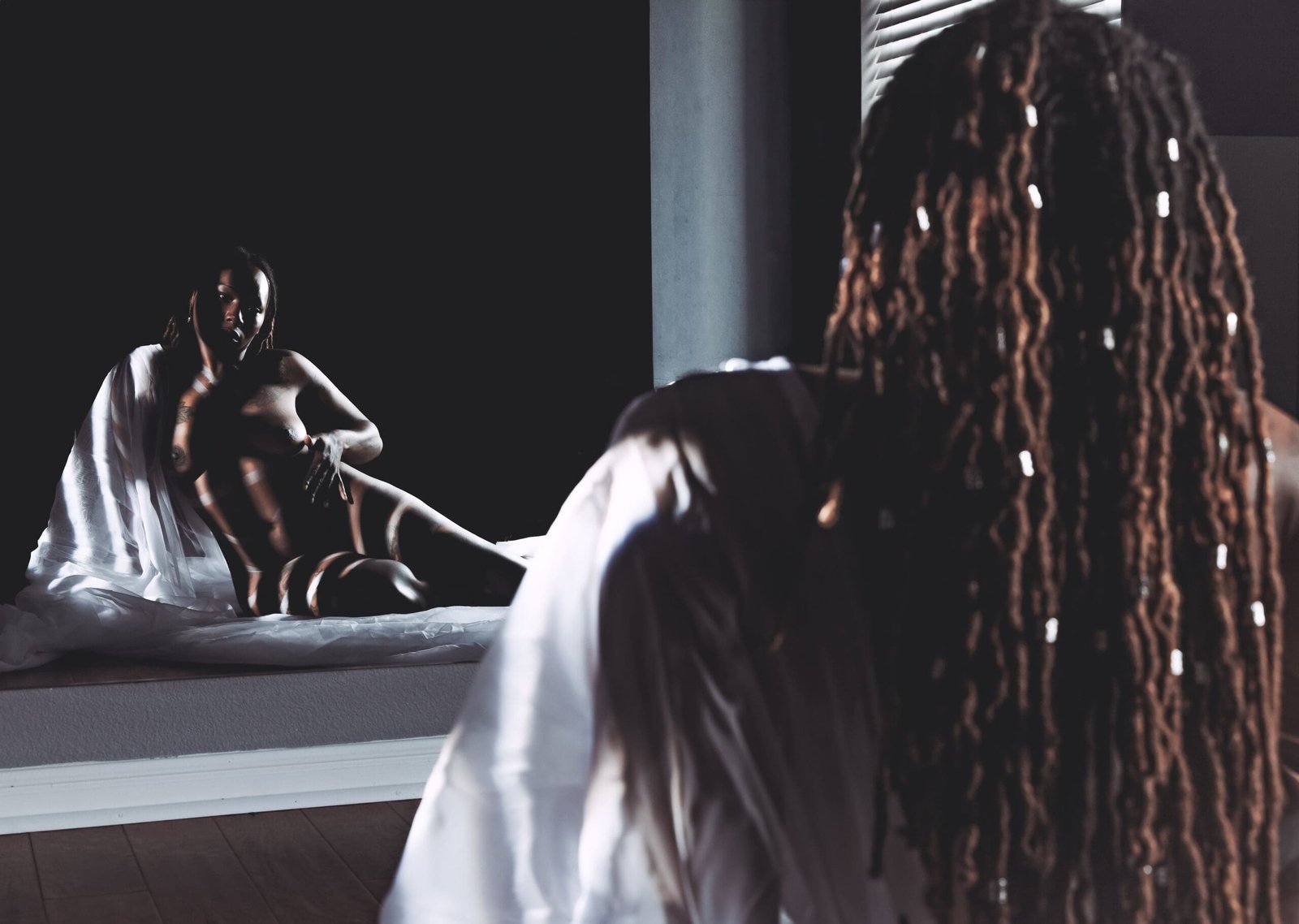
Knotted Tree Studios — fine art nude photography, Austin, Texas
How KTS Approaches These Sessions
The private venue in Buda matters here. When you’re here, the building is yours. No other photographers, no shared studio space, no strangers. That level of privacy is not incidental to the work. It’s a precondition for it.
Before the session starts, we have a boundaries conversation. Not a form to run through. An actual conversation about what you are comfortable with, what you want the images to do, and what the parameters of the shoot are. I work within those parameters without exception. Nothing is captured that you haven’t explicitly agreed to.
The work itself is directed. You will not be left to figure out what to do with your body while I wait behind a camera. I’m watching the light, watching the form, watching the frame — and I’ll tell you specifically where to move, how to shift your weight, when to hold still. Direction takes the discomfort out of the space between poses.
Images are delivered to your private gallery within three weeks. Nothing is shared publicly without a separately signed model release. Your images belong to you. That’s written into the service agreement.
Fine art nude photography is uncomfortable for some people to talk about. The discomfort is cultural, not rational — it comes from a reflexive association between nudity and exposure, between being seen and being vulnerable in a way that feels threatening rather than empowering.
What I’ve watched happen in the sessions I’ve done is the opposite of that. Women walk in uncertain and walk out with images of themselves they didn’t think were possible. Honest without being harsh. Direct without being unkind. Beautiful in a way that has nothing to do with conventional standards of what beautiful means in photography.
It is not what you think it is. It is considerably more interesting than that.
Ready To See The Work?
Fine art nude sessions in Austin, Texas. Private venue. Consent-first process. Limited to 10 sessions per month.